



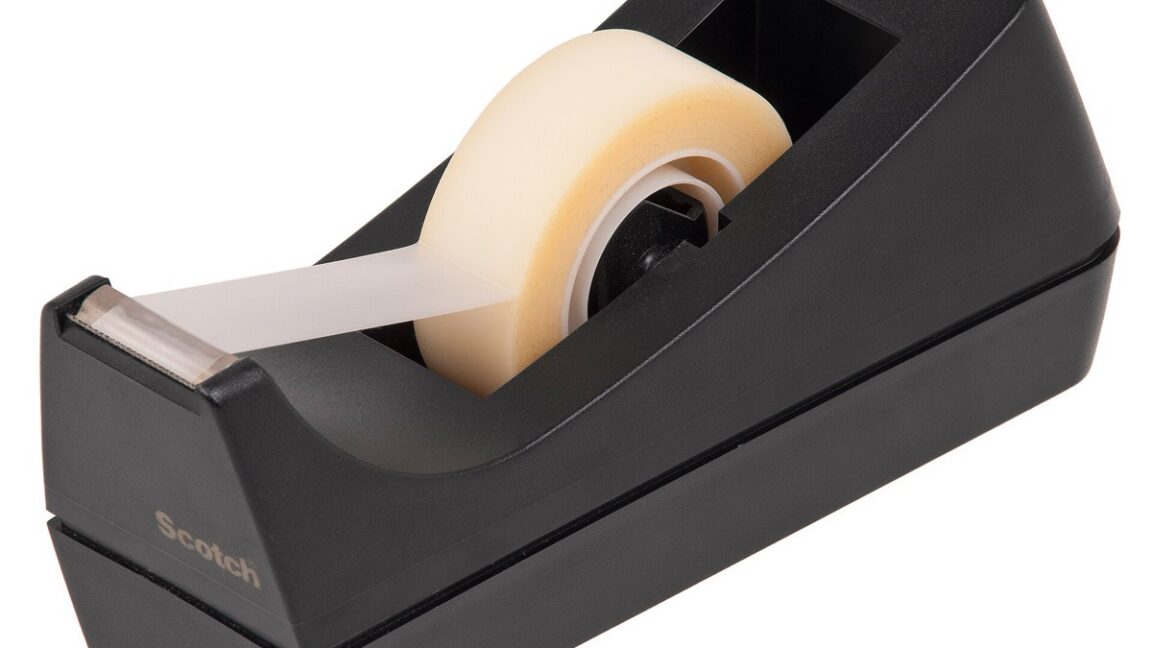
Scotch Tape Failure Leaves Scientists Perplexed for Decades
For decades, the seemingly innocuous roll of scotch tape has been a staple in households and offices around the world. However, beneath its unassuming exterior lies a complex web of physics that can lead to catastrophic failure. Researchers have finally cracked the code behind the sudden and dramatic tearing of scotch tape, revealing a shocking truth about the speed and force involved.
The Anatomy of Scotch Tape Failure
Scotch tape failure is not just a matter of poor quality or improper use; it is an intricate phenomenon that involves the interaction between the adhesive, the backing material, and the ambient environment. Scientists have long been fascinated by the sudden ripping of scotch tape, which can occur without warning, often at the most inopportune moments.
According to Dr. Maria Rodriguez, a materials scientist at Harvard University, “the scotch tape failure is not just about the tape itself, but also about the physics of the environment it’s used in.” Her team has discovered that micro-cracks travel along the peeling tape at supersonic speeds, producing shock waves and sound pulses.
The Physics of Supersonic Cracking
The discovery was made using advanced imaging techniques, including high-speed cameras and acoustic sensors. By analyzing the footage, scientists were able to visualize the rapid propagation of cracks along the surface of the scotch tape. This process is remarkably similar to the way a rock fractures when it’s struck by lightning.
As Dr. Rodriguez explained, “the cracking of scotch tape is not just a matter of friction or adhesion; it’s about the interaction between two very different materials – the sticky side and the non-stick side.” The researchers found that as the adhesive weakens, micro-cracks begin to form on the surface of the tape. These cracks then travel at incredible speeds, producing shock waves that can shatter the surrounding material.
#Scotch Tape Failure: A Matter of Critical Speed
The critical speed at which scotch tape failure occurs is estimated to be around 10 meters per second (22 miles per hour), which is remarkably fast for a seemingly innocuous product. This speed is significantly higher than other everyday materials, such as paper or plastic.
Dr. Rodriguez’s team has also discovered that the temperature and humidity of the environment play a crucial role in scotch tape failure. “When it gets hot and humid, the adhesive becomes more brittle and prone to cracking,” she said. “This is why we often see scotch tape failure in tropical environments.”
#The Future of Scotch Tape
While scientists are still working to understand the intricacies of scotch tape failure, researchers are already exploring ways to improve its durability and performance.
One potential solution involves creating new materials with improved adhesion properties, which can withstand the stresses of everyday use. Another approach is to develop specialized coatings that can help to slow down the propagation of cracks.
As Dr. Rodriguez noted, “while scotch tape failure may seem like a minor inconvenience, it’s actually an opportunity for us to learn about the fundamental physics of materials science.” The discovery has far-reaching implications for industries ranging from aerospace to construction, where materials are subjected to extreme stresses and strains.
For now, the next time you reach for that roll of scotch tape, remember that beneath its unassuming exterior lies a complex web of physics waiting to be unraveled.